
Artificial intelligence, the greatest paradox of our history (2.)
Now new things- the AI will be similar than us. The source of the problem, the humans, not the technology.

One of the most serious dangers of artificial intelligence is that it unintentionally reproduces and reinforces social prejudices, leading to digital discrimination. Research clearly shows that algorithmic bias is not the fault of the "machine," but stems from biased data fed into the system by humans. Machine learning models process billions of pieces of data, and if these data sets are themselves subjective, biased, or simply not thorough enough, the algorithms will also produce biased results. This is further complicated by the so-called "black box phenomenon," as the operation of most advanced AI algorithms isn’t transparent, making it difficult to identify and address biases.
Discrimination is already manifesting itself in real-world applications, raising serious ethical and legal dilemmas. Such areas include credit rating, criminal justice decision-making, human resources tools, insurance premiums, and even the selection of new employees. For example, Amazon's previous recruitment algorithm systematically ranked female applicants lower because, as it turned out, the system had been trained on male-dominated data sets.
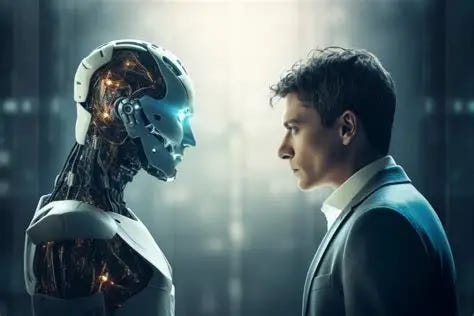
Source credit:Freepik
Similarly, stereotypical biases have also been observed in image generator models such as Midjourney and DALL-E. Since we are dealing with a social and sociological problem, the solution is obviously not simple. Looking at it closely, it seems almost impossible. Research materials have unanimously concluded that algorithmic bias is fundamentally a human problem. Evidence for this can be found in previous scientific research, such as earlier experiments conducted with the Implicit Association Test (IAT) by Anthony G. Greenwald, Mahzarin Banaji, and Brian Nosek. (If you would like to try such a test, visit www.implicit.harward.edu.)
Research using this test has revealed that our conscious and subconscious attitudes often diverge, becoming virtually incompatible. One typical example of this phenomenon is discrimination. Our subconscious memory stores and processes everything we have experienced, learned, read, seen, and heard in our lives so far. It keeps track of every stimulus that affects us. The result of this effect is, for example, that if someone is above average height and male, it subconsciously evokes a very strong positive association.
As we can see, the problem in this case isn’t "technology-based." Solving the problem therefore, goes beyond technical troubleshooting. The algorithmic bias that has been discovered essentially points to social and human problems, so the solution must also be based on strengthening human responsibility. Recognizing the problem should therefore not lead to the rejection of technology, but to the development of a proactive, human-driven control and oversight mechanism.
Thank you for reading the No New Things. If you value this article or any others, please share and consider a subscription, or perhaps buying a virtual coffee.